
Hip Pain & Hypermobility: How to Build Stability Without Over-Stretching

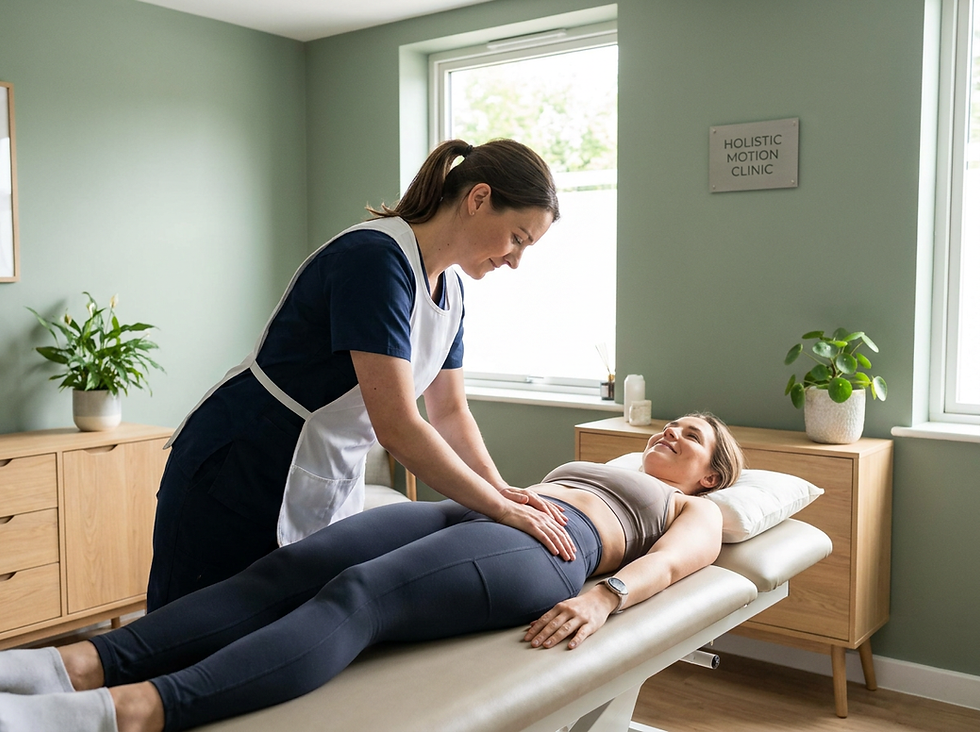
If you've always been "naturally flexible" but struggle with persistent hip pain that stretching never quite fixes — this post is for you.
Hypermobility is far more common than most people realise. And while extra flexibility might sound like a benefit, it often comes paired with hip instability, deep aching, and a frustrating cycle of discomfort. The reason stretching doesn't help? It's often making things worse.
What Is Hypermobility?
Hypermobility means your joints move beyond the normal range of motion due to lax connective tissue — ligaments, tendons, and joint capsules. It exists on a spectrum, from localised flexibility in one joint to generalised hypermobility throughout the body.
You might recognise some of these signs:
Joints that feel "clicky," loose, or unstable
Hip pain that's hard to pinpoint — groin, outer hip, or deep inside the joint
Constant urge to stretch, but the relief never lasts
Fatigue in the muscles around your hips and pelvis
A history of recurring sprains or strains
Why Stretching Can Make It Worse
When the ligaments around your hip are already lax, your muscles compensate — working overtime to stabilise the joint. When you stretch those muscles, you remove one of the few stabilising forces the joint has.
The short-term relief is real, but if stretching is your primary response to hip pain, you're likely deepening the underlying instability over time.
The hip needs control, not more range.
How to Build Stability
Strengthen Before You Stretch
Prioritise strengthening over passive stretching:
Glute bridges — focus on the controlled lowering, not just the lift
Clamshells — slow, with a resistance band
Side-lying hip abduction — keep the pelvis completely still
Single-leg exercises — step-ups, hip hinges, slow single-leg squats
Move Through a Range You Can Control
For hypermobile individuals, this often means choosing a smaller range than you're capable of. Instead of sinking into a deep stretch, work in the range where you can feel muscular engagement throughout. Over time, you build stability within your range — rather than collapsing passively into it.
Build Body Awareness
Hypermobile joints have impaired proprioception — the sensory feedback between your joint and your brain is less accurate than normal. Challenge it with:
Single-leg balance work (progress to unstable surfaces)
Slow, intentional movement that requires you to "feel" the joint
Clinical yoga or Pilates with a focus on control
Think Beyond the Hip
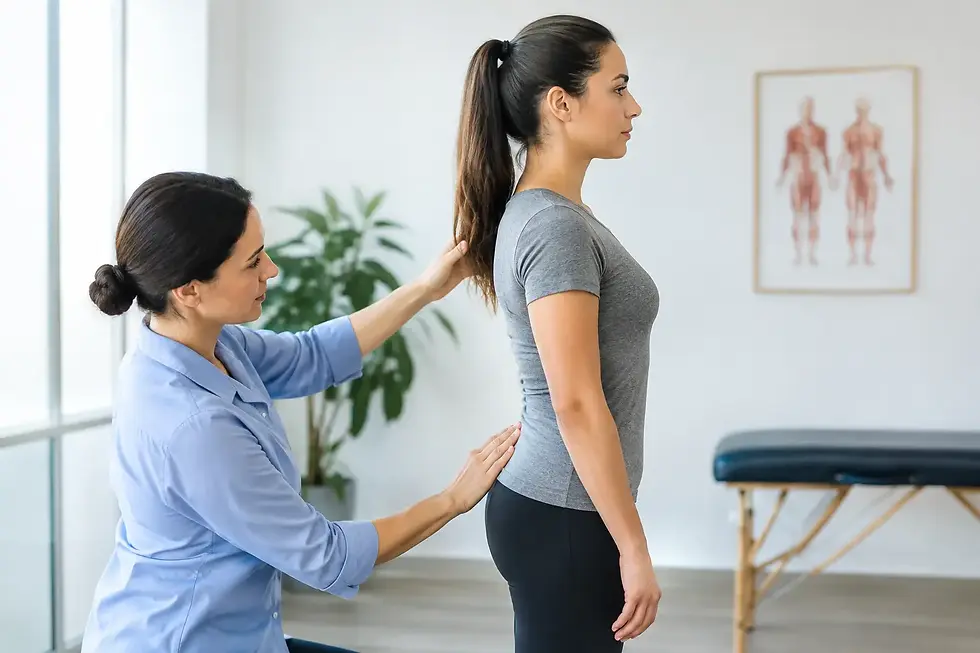
The hip doesn't work in isolation. Your lower back, pelvis, knees, and feet all influence how load is distributed through the joint. A thorough assessment that looks at your whole movement pattern — not just the painful area — is essential.
When to Seek Help
If you're experiencing persistent hip or groin pain, discomfort with daily activities, or a sense of instability or "giving way," it's worth getting a professional assessment. Generic online programmes are rarely appropriate for hypermobile individuals and can reinforce the very patterns causing the problem.
A registered osteopath can identify what's driving your symptoms and build an individual plan calibrated to your hypermobility.
Ready to Take the Next Step?
At Laura Fishlock Osteopathy, our team takes a thorough, whole-body approach to hip pain and hypermobility. Same-day appointments are often available at our Newbury and Hungerford clinics.
📞 07733 201225 | laurafishlockosteopathy.co.uk 📍 Newbury (Jubilee House) | Hungerford (The Courtyard)


Comments