

How to Ease Desk Pain Without Pausing Your Day

That familiar ache between your shoulder blades at 3pm, a stiff neck during the drive home, or a lower back that seems to seize when you stand up is not simply something you have to put up with. Learning how to ease desk pain starts with recognising that your body is built to move, not to hold one position for hours at a time.
A good desk set-up can help, but comfort is rarely about finding one perfect posture and maintaining it rigidly. It is about creating enough support, variety and movement through your working day so your muscles and joints are not asked to do the same job for too long.
Why desk work can become painful
Desk pain is often blamed on posture alone. Posture does play a part, particularly when your head is repeatedly held forward or your shoulders are lifted towards your ears. But the bigger issue is usually prolonged stillness.
When you are absorbed in emails, meetings or a deadline, it is easy to stay in one position without noticing. The muscles around your neck, upper back, hips and lower back may gradually become overworked, while other areas receive very little movement. Stress can add another layer, encouraging shallow breathing and a more guarded, tense posture.
Pain may not begin at your desk. A demanding gym session, poor sleep, an old injury, a long commute or a busy period at home can all lower your usual tolerance. This is why two people can use the same workstation and have very different experiences. Your plan needs to reflect your body, work demands and day-to-day life.
How to ease desk pain by changing your working rhythm
Rather than waiting until you are sore, build small resets into the day. These do not need to become another task on an already crowded to-do list. Think of them as short opportunities to give your body a different input.
Aim to change position regularly. You might stand while taking a call, walk to refill your water bottle, or spend two minutes away from the screen between focused tasks. A brief movement break every 30 to 60 minutes can be more useful than one long stretch at the end of the day, especially if your work is screen-heavy.
When you do stand, avoid simply swapping one static position for another. Shift your weight from one foot to the other, take a few steps, roll your shoulders gently or reach your arms upwards as you breathe out. These small movements can help reduce the sense of compression and stiffness that builds through the spine, hips and chest.
If your work allows it, vary where and how you work. A sit-stand desk can be helpful for some people, but it is not essential and it is not a cure in itself. Alternating between sitting and standing is generally more useful than standing all day. If you use a laptop away from your usual desk, be particularly mindful of your screen height and the position of your neck.
Make your workstation work with you
You do not need an expensive office overhaul to make meaningful changes. Start with the things you use most and adjust them to suit your proportions.
Your chair should allow your feet to rest comfortably on the floor or on a stable footrest, with your hips supported and your knees relaxed. There is no universal rule that your knees must sit at one exact angle. The key is to avoid feeling perched, cramped or forced to reach for the floor.
Bring your keyboard and mouse close enough that your elbows can stay near your sides. Reaching forwards for a mouse all day can leave the shoulder and forearm working harder than they need to. If one shoulder always feels tighter, notice whether you are repeatedly leaning or reaching towards one side.
Your screen should be positioned so you can view it without continuously dropping or craning your head. For many people, the top of the screen sits around eye level, although this varies with glasses, screen size and personal comfort. If you use a laptop for extended periods, a separate keyboard and mouse can make a substantial difference because they allow the screen to be raised without forcing your arms upwards.
It can also help to keep frequently used items within easy reach. The aim is not a frozen, perfectly symmetrical desk. It is to reduce unnecessary strain and make changing position easier.
Try a short desk mobility reset
Gentle movement should feel comfortable and controlled, not like you are forcing a stretch. If a movement causes sharp pain, pins and needles, dizziness or worsening symptoms, stop and seek appropriate professional advice.
Start by sitting tall but relaxed, letting your shoulders soften away from your ears. Take three slower breaths, allowing your ribs to expand rather than holding your stomach tightly. Then turn your head slowly to look over one shoulder and return to centre, repeating on the other side. Keep the movement small and easy.
Next, roll your shoulders backwards several times, then gently draw your shoulder blades towards each other as though you are widening across the collarbones. Release fully between each repetition. Follow this by standing up, placing your hands on your hips if comfortable, and taking a few easy steps around the room.
For your wrists and forearms, open and close your hands, then slowly circle your wrists in both directions. This can be particularly useful after long periods of typing or using a mouse. The goal is not to complete a perfect routine. It is to give your body regular reminders that it can move.
Support your body beyond the desk
Desk discomfort often responds best when workplace changes are combined with support outside working hours. A brisk walk, gentle strength work, clinical yoga or a regular mobility practice can improve confidence in movement and help build capacity over time. The most effective choice is usually one you can repeat consistently and genuinely enjoy.
Sleep and stress deserve attention too. A difficult night can make normal muscle tension feel far more noticeable the next day. Likewise, when you are under pressure, you may clench your jaw, tighten your shoulders and work through breaks without realising it. A short pause to breathe, move or step outside is not indulgent. It can be a practical part of managing persistent tension.
Avoid the temptation to make dramatic changes all at once. Replacing every piece of office equipment, committing to an intense exercise plan and trying to hold yourself in an unfamiliar posture can create more pressure than progress. Start with one or two changes you can sustain, then observe what shifts over a couple of weeks.
When desk pain needs individual support
It is sensible to seek professional assessment when pain is persistent, keeps returning, limits your work or exercise, or affects sleep and everyday activities. You should also seek urgent medical advice for symptoms such as significant weakness, numbness, sudden severe pain, problems with balance, or changes in bladder or bowel control.
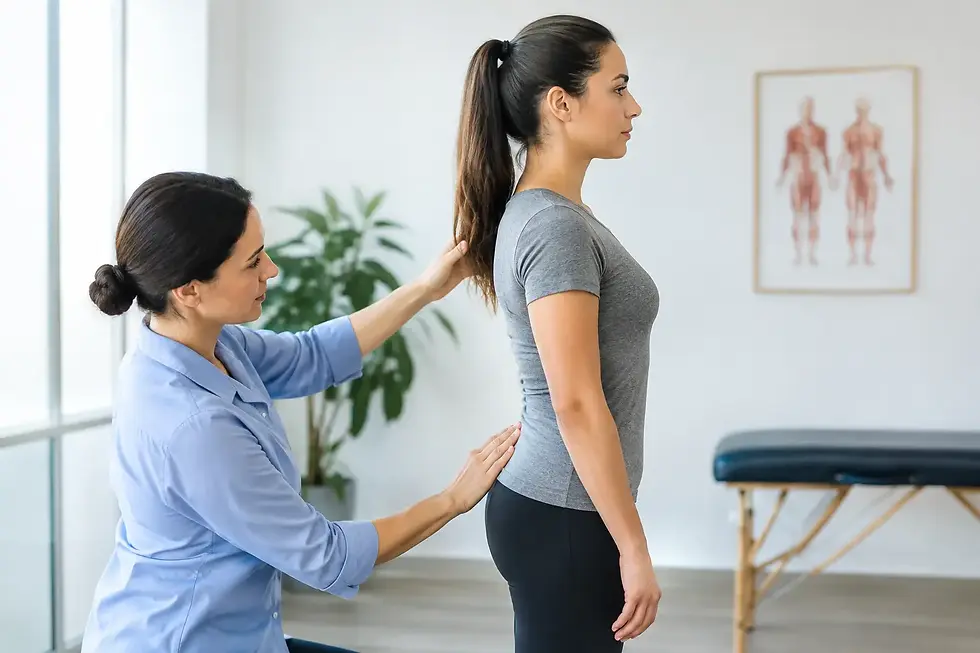
For ongoing musculoskeletal discomfort, personalised care can help you understand the factors contributing to your symptoms. At Laura Fishlock Osteopathy, treatment may combine hands-on osteopathic care with practical guidance, rehabilitation and movement support, shaped around your work, goals and current capacity. The purpose is not simply to chase a temporary reduction in symptoms, but to help you regain confidence in how your body moves and feels.
Your desk may be where discomfort becomes most obvious, but it does not have to define your working day. A few well-timed movements, a more considered set-up and the right support when you need it can help you feel more comfortable, capable and in control again.


Comments