
Why Your Pain Keeps Coming Back — And How Body Alignment and Functional Movement Can Change That


You've had treatment. You've rested. You've done the stretches. And for a while, things felt better.
Then it came back.
If this sounds familiar, you're not alone. Recurring pain — whether it's in your lower back, neck, hips, or shoulders — is one of the most common reasons people come through our doors at Laura Fishlock Osteopathy. And more often than not, the reason it keeps returning isn't the injury itself. It's what's happening in the body around it.
Why Pain Keeps Coming Back
When pain recurs, the instinct is to treat the painful area directly, and that makes sense — if your lower back hurts, you focus on your lower back. However, the body doesn't work in isolated parts, It works as a system.
Recurring pain is often a signal that somewhere in that system, something is compensating. A muscle is overworking because another isn't pulling its weight. A joint is absorbing load it wasn't designed to handle because the structure around it has shifted. The painful spot isn't always the problem — it's often the victim.
This is why treatment alone, without addressing the underlying pattern, tends to provide temporary relief rather than lasting change.
What Is Body Alignment?
Body alignment refers to how the different parts of your body — your joints, bones, and soft tissues — are positioned relative to each other, both at rest and during movement.
Think of it like the alignment on a car. If the wheels are slightly out, the tyres wear unevenly and the car pulls to one side. You might not notice it immediately, but over time the strain builds. The same principle applies to your body.
Poor alignment doesn't always come from one dramatic event. It develops gradually — through years of sitting in the same position, carrying a bag on one shoulder, favouring one side when you stand, or adapting to an old injury. These small patterns accumulate, and eventually the body reaches a tipping point where the compensation becomes painful.
Common signs of alignment issues include:
One shoulder sitting higher than the other
Uneven hip height when standing
Head that sits forward of the shoulders
Knees that turn inward or outward when walking
One foot that turns out more than the other
These aren't cosmetic concerns. They reflect how load is being distributed through your entire musculoskeletal system — and they have a direct impact on where pain shows up.
What Is Functional Movement?
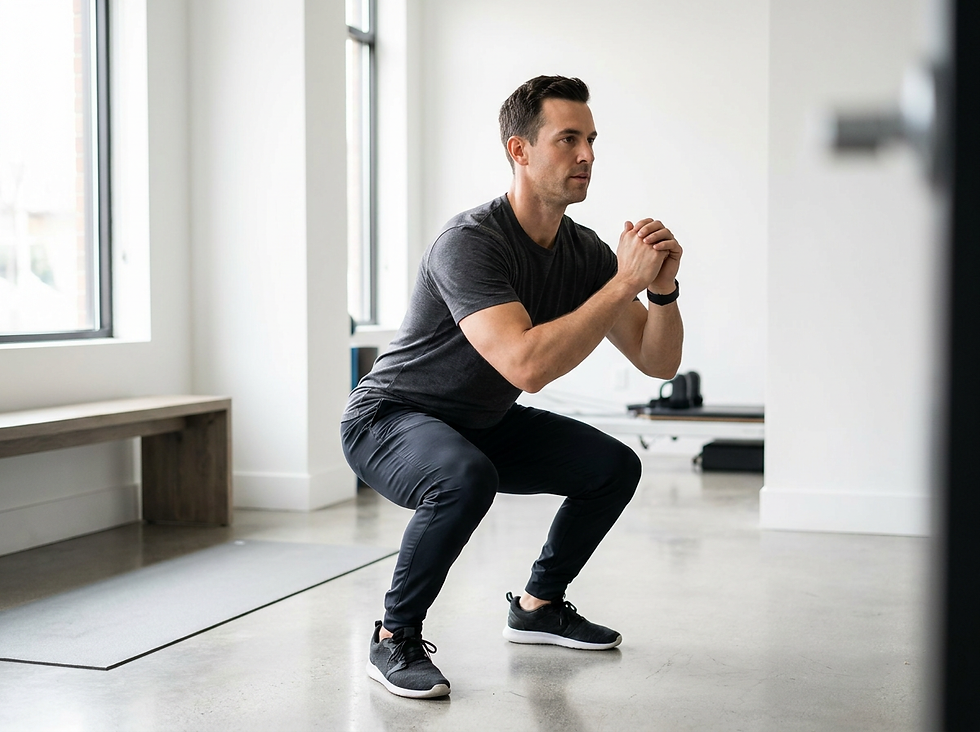
Functional movement is the ability to move through everyday tasks — bending, lifting, reaching, twisting, walking — with proper muscle activation, joint mobility, and control.
It's not about being athletic or flexible. It's about whether the right muscles are doing the right job at the right time.
When functional movement breaks down, the body finds workarounds. You might bend from your lower back instead of hinging at your hips. You might reach with your shoulder elevated because your thoracic spine isn't rotating freely. These workarounds aren't laziness — they're the body's intelligent response to restriction. But they come at a cost: increased load on certain structures, reduced load on others, and over time, pain.
A few examples of how functional movement affects pain:
Lower back pain is frequently linked to poor hip mobility and weak glutes — the back overworks because the hips aren't doing their share
Neck and shoulder tension often connects to restricted thoracic (mid-back) rotation, which forces the neck to compensate during everyday movements
Knee pain can stem from weak hip stabilisers or poor foot mechanics, not a knee problem at all
Recurring hamstring issues are often driven by anterior pelvic tilt and a lack of core stability
How Alignment and Functional Movement Are Connected
These two things are deeply linked. Poor alignment creates restricted movement patterns. Restricted movement patterns reinforce poor alignment. Over time, the body learns these patterns — they become default. And that's where chronic, recurring pain takes hold.
The good news? Patterns that have been learned can be unlearned. The body is remarkably adaptable. With the right assessment, treatment, and movement work, it's entirely possible to interrupt these cycles and build a more sustainable foundation for how you move.
What We Do Differently at Laura Fishlock Osteopathy
When a patient comes to us with recurring pain, we don't just look at where it hurts. We look at the whole picture.
Our assessment considers:
Posture and static alignment — how you hold yourself at rest
Movement patterns — how your body coordinates during functional tasks
Joint mobility and restriction — where movement is limited and how the body is compensating
Muscle activation — which muscles are overworking, which are underused
Your daily life — your job, your posture at your desk, how you exercise, how long you sit, how you sleep
From there, we build a plan that combines hands-on osteopathic treatment — to address immediate pain, reduce tension, and restore joint mobility — with movement rehabilitation designed to correct the underlying patterns.
This isn't a quick fix. It's a process. But for people who've been dealing with recurring pain for months or years, it's often the approach that finally makes a lasting difference.
Simple Steps You Can Take Right Now
You don't have to wait for an appointment to start making changes. Here are a few practical things to be aware of:
Notice your resting posture. When you're sitting at your desk or standing in a queue, where is your weight? Are you collapsed into one hip? Is your head forward? Awareness is the first step.
Check your hip hinge. When you pick something up from the floor, are you bending from your back or hinging at your hips? Practising a proper hip hinge — soft bend in the knees, hinge forward from the hips, back long — is one of the most protective movement patterns you can develop.
Move more, not just differently. Sustained positions — even good ones — create strain. Regular movement breaks throughout the day reduce the load on any one structure and keep your tissues healthier.
Breathe. Diaphragmatic breathing directly supports core stability and reduces tension through the neck and shoulders. If you're a chest breather, this alone can make a significant difference.
Get assessed. If pain keeps returning, a thorough movement and alignment assessment will tell you far more than treating the painful area in isolation ever could.
Book an appointment at Laura Fishlock Osteopathy in Newbury or Hungerford — same-day appointments available.
Visit laurafishlockosteopathy.co.uk or call us on 07733 201225.


Comments