

A Guide to Pelvic Pain Relief That Starts Gently

Pelvic discomfort can make ordinary moments feel unexpectedly difficult: sitting through a meeting, walking the dog, exercising, sleeping or simply relaxing at the end of the day. This guide to pelvic pain relief is designed to help you respond with care rather than push through, recognise when you need medical advice, and begin rebuilding confidence in your body.
Pelvic pain is not one single experience. It may feel sharp, heavy, aching, burning, tight or like a deep sense of pressure. It can be linked with movement, posture, periods, pregnancy, recovery after birth, bowel or bladder habits, intimacy, a previous injury, stress, or no immediately obvious trigger. Because there are many possible contributors, lasting progress usually starts with curiosity and a plan tailored to you.
A guide to pelvic pain relief begins with understanding
The pelvis is a busy meeting point for the lower back, hips, abdominal wall, pelvic floor and nervous system. When one area is irritated, overloaded or moving differently after pain or injury, the body may compensate elsewhere. A stiff hip, guarded lower back, altered breathing pattern or prolonged sitting posture can all affect how the pelvis feels and functions.
This does not mean the cause is always musculoskeletal. Pelvic symptoms deserve proper consideration, particularly if they are new, persistent, worsening or affecting daily life. A GP or appropriate healthcare professional can help investigate symptoms and rule out causes that need medical treatment. This creates a safer foundation for any hands-on care, movement work or self-management plan.
It can also be helpful to notice patterns without becoming hypervigilant. For one or two weeks, make a simple note of when discomfort appears, what it feels like, your activity level, sleep, stress, cycle timing if relevant, and what settles it. These details can reveal whether long drives, lifting, running, constipation, poor sleep or a demanding week are adding to the load.
When pelvic pain needs urgent attention
Do not try to manage significant new symptoms alone. Seek urgent medical advice if pelvic pain is sudden and severe, follows an accident, occurs with a high temperature or vomiting, or comes with fainting, heavy bleeding, blood in urine or stool, or difficulty passing urine.
You should also seek prompt advice for pelvic pain during pregnancy, pain that is rapidly getting worse, unexplained weight loss, or symptoms that regularly wake you from sleep. These signs do not automatically mean something serious is wrong, but they do need timely assessment.
Start by reducing strain, not stopping life
When discomfort is persistent, it is tempting to either carry on exactly as before or stop moving altogether. Neither extreme is usually helpful. Complete rest can lead to more stiffness and apprehension, while repeatedly pushing through pain can keep an irritated area on high alert.
Aim for a middle ground. Break longer tasks into smaller sections, alternate sitting and standing, and give yourself brief movement breaks during desk work or journeys. If a walk is manageable for ten minutes but not forty, begin with ten and build gradually. The best starting point is often the amount of activity that leaves you feeling no worse later that day or the following morning.
Consider the practical details too. A supportive chair, a footstool, changing your driving position, avoiding a heavy bag on one shoulder and using sensible lifting technique may reduce repeated strain. These are not dramatic fixes, but small changes can create enough breathing room for recovery.
Gentle movement for pelvic comfort
Movement should feel like an invitation, not a test. The right exercises depend on your symptoms, mobility, medical history and confidence, so there is no single pelvic routine that suits everyone. If an exercise creates sharp pain, a strong increase in symptoms or leaves you significantly worse afterwards, stop and seek individual guidance.
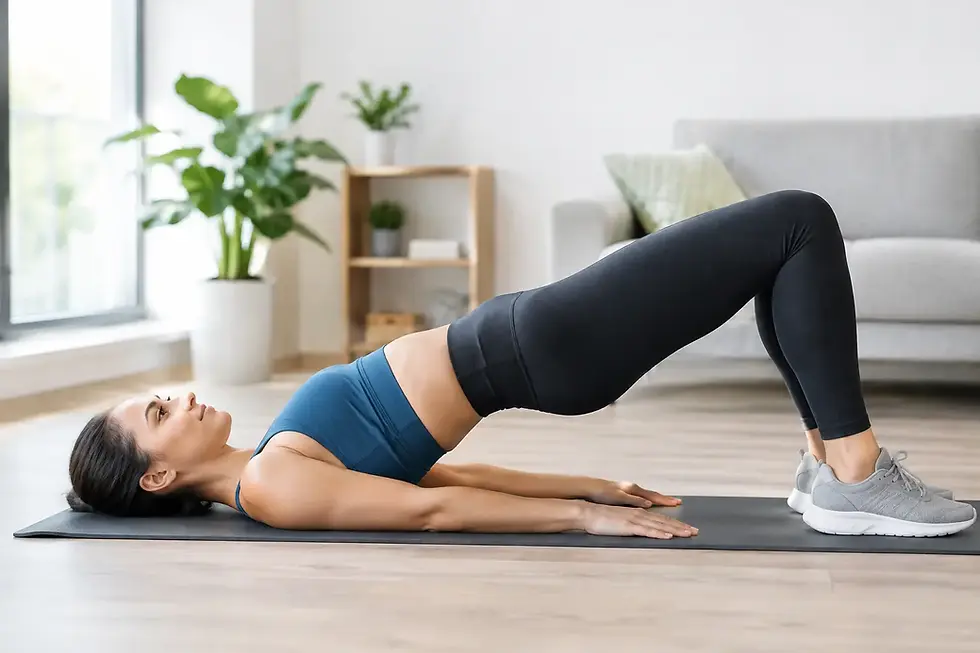
For many people, calm, comfortable movement is a useful place to begin. Try slow walks, easy hip movements within a pain-free range, gentle stretches for the buttocks or hip flexors, and relaxed mobility for the lower back. Focus on smooth breathing rather than forcing a deeper stretch. Tension often rises when we brace against discomfort, and the pelvis can feel more guarded as a result.
Your breath matters here. Place a hand on your lower ribs and allow them to expand softly as you breathe in. Let your shoulders and jaw soften on the exhale. This is not about taking huge breaths or trying to control every muscle. It is a simple way to give your nervous system a signal of safety and reduce unnecessary gripping through the abdomen, hips and pelvic area.
Pelvic-floor exercises can be valuable for some people, but more tightening is not always the answer. A pelvic floor that is already overactive or tense may benefit more from learning to relax and coordinate than from repeated squeezing exercises. A qualified pelvic health physiotherapist can assess this in detail where appropriate.
Support the factors that turn the volume up
Pain is physical, but the intensity of pain can be influenced by sleep, stress, fatigue, fear of movement and the demands placed on your body. This is not a suggestion that pain is imagined. It is recognition that the nervous system responds to the whole picture.
If sleep is disrupted, start with one achievable change: a consistent wind-down time, less screen use before bed, or a comfortable pillow arrangement that supports your hips and knees. If stress is high, short periods of quiet breathing, a gentle yoga practice, a restorative treatment or time outdoors may help your body come out of constant tension.
Bowel and bladder habits can matter too. Straining, rushing to the toilet, holding on for long periods or becoming dehydrated may contribute to pelvic discomfort for some people. Regular fluids, adequate fibre and unhurried toilet habits are simple but worthwhile foundations. If you have persistent changes in bowel or bladder function, speak to a healthcare professional.
How personalised hands-on care can help
A thorough osteopathic assessment does not assume that every pelvic symptom comes from the pelvis itself. It considers how you move, where you hold tension, the mobility of the hips and lower back, your posture, activity demands, past injuries and the way pain is affecting your confidence.
Where musculoskeletal factors appear relevant and medical concerns have been appropriately addressed, gentle hands-on treatment may help ease areas of restriction or tension. This may be combined with practical guidance on pacing, posture, breathing and corrective movement. The aim is not to offer a quick fix, but to help you understand your body and make daily activity feel more manageable.
At Laura Fishlock Osteopathy, care can be shaped around your individual goals, whether that means returning to comfortable walks, feeling less restricted at work, moving with greater ease after exercise or finding ways to settle a body that has felt persistently on guard. Some people benefit from a short period of focused support; others need a slower, more gradual plan. It depends on the history behind the pain and the demands of your life.
Questions to bring to an appointment
A useful appointment should leave you clearer, not overwhelmed. You may wish to ask what patterns have been noticed, which activities are currently helpful, what to modify temporarily, and how you will measure progress beyond a pain score. Better sleep, easier sit-to-stand movement, a longer comfortable walk or less fear around exercise can all be meaningful signs of change.
Be open about what you have already tried, including exercise programmes, medication, previous treatment or approaches that did not feel right. Good care is collaborative. Your preferences, schedule and comfort with touch or movement should always shape the plan.
Pelvic pain can be tiring and isolating, but it does not have to define every decision you make. Give yourself permission to seek answers, move within your current capacity and accept support that looks at the wider picture. With the right guidance and steady, compassionate steps, you can begin to feel more at home in your body again.


Comments