
What Happens During Cranial Treatment Sessions?

A cranial treatment session is often much quieter than people expect. There may be no forceful movements, clicking or complicated equipment - yet the appointment is still carefully led by what you are experiencing in your body and daily life. If you are wondering what happens during cranial treatment, the short answer is that your practitioner listens, assesses and uses a very gentle hands-on approach to support comfort, movement and relaxation.
For some people, that feels like a welcome pause from the physical strain of work, exercise, poor sleep or ongoing tension. For others, it is part of a wider plan for improving mobility, restoring confidence in movement and feeling more at ease in their body.
What is meant by cranial treatment?
Cranial treatment can refer to cranial osteopathy or craniosacral therapy. These approaches share a light-touch style of treatment, but their training backgrounds and the way practitioners describe their work can differ. At Laura Fishlock Osteopathy, any treatment should be tailored to you rather than delivered as a fixed routine.
The word “cranial” can make it sound as though the session only concerns the head. In practice, a practitioner may work with areas including the head, face, neck, spine, ribcage, pelvis, arms or legs. The body works as an interconnected whole: tension around the jaw, for example, may sit alongside neck stiffness or a guarded upper back; a sore lower back may influence how someone stands, breathes and moves.
Cranial techniques are typically extremely gentle. They are not designed to force bones into place, and they should not feel like a high-velocity manipulation. The intention is to use sensitive contact alongside clinical observation, helping the practitioner understand areas that may feel restricted, tense or less comfortable to move.
Your appointment starts with your story
Before any hands-on work, your practitioner will take time to understand why you have come in. This conversation matters as much as the treatment itself. You may be asked when your symptoms began, what makes them better or worse, how they affect sleep, work, exercise and family life, and what you would like to get back to doing more comfortably.
They will also ask about your general health, previous injuries, current care and any relevant medication. This helps make sure cranial treatment is appropriate and helps shape a plan around your needs. If your symptoms need assessment elsewhere, or if treatment is not suitable on the day, that should be discussed openly.
Assessment is individual, not a one-size-fits-all routine
The assessment may include watching how you move, checking posture, gently feeling areas of tension and asking you to make simple movements. You might remain fully clothed, so comfortable clothing is usually helpful. Your practitioner will explain what they are doing and seek your consent before touching you.
There is no need to “perform” during an appointment or tolerate a position that feels uncomfortable. You can ask questions, request an adjustment, take a break or stop treatment at any time. A good session is collaborative: your feedback guides the pace and approach.
What happens during cranial treatment itself?
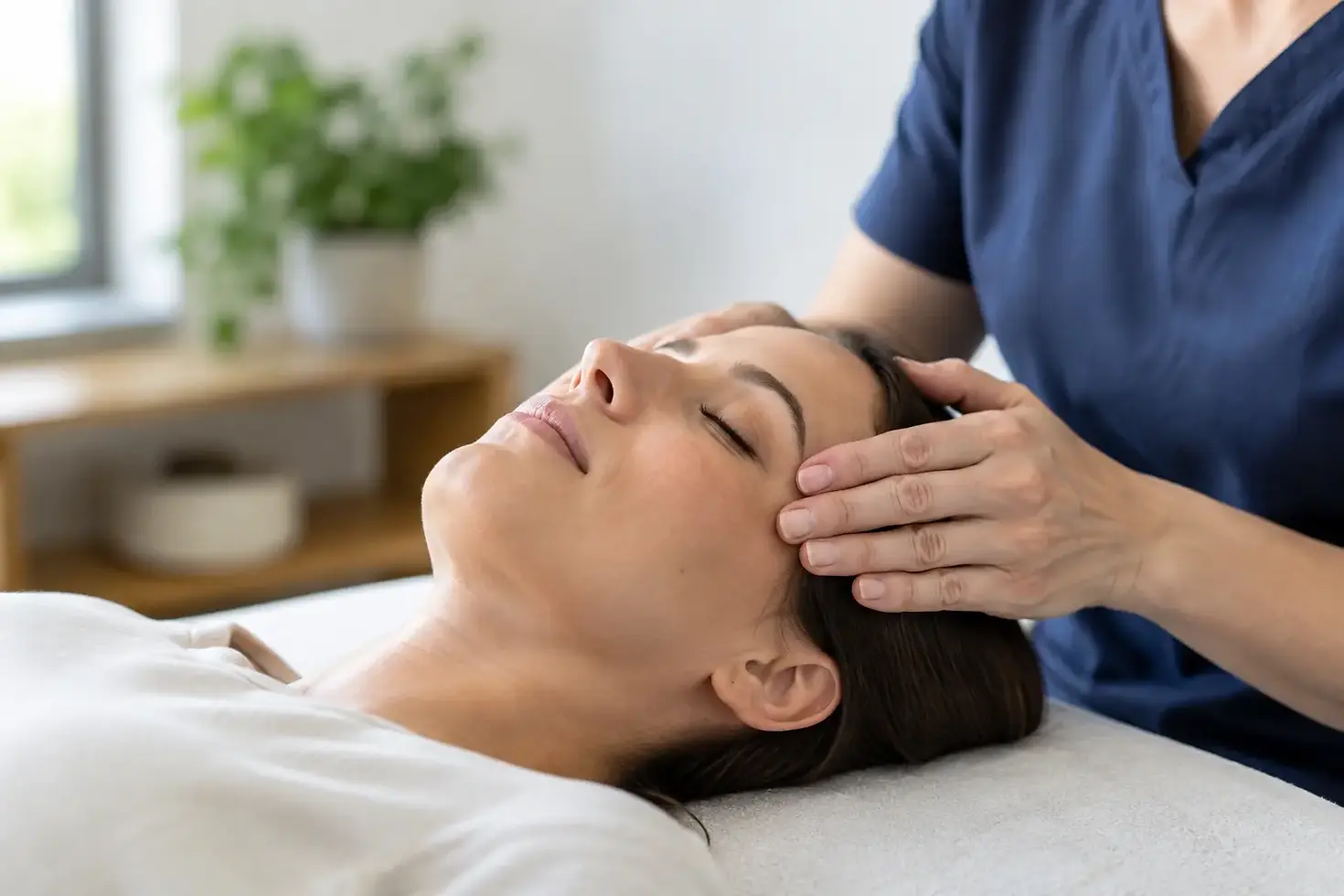
Once you are comfortable, you may lie on a treatment couch or, where appropriate, sit supported. The practitioner may place their hands gently beneath your head, around your neck, on your shoulders, along your back or at the pelvis. Contact is generally still and light, sometimes held for a little while before the hands move to another area.
From the outside, it can look deceptively simple. Rather than applying strong pressure, the practitioner is paying close attention to the quality of movement and tension under their hands, as well as your breathing, comfort and responses. They may use gentle techniques around soft tissues or encourage relaxed movement where this feels useful.
A session does not have to focus on the exact point that feels painful. If a client has persistent neck tension, for instance, the practitioner may also consider how the upper back, shoulders, breathing pattern and jaw are contributing to the overall load on that area. This whole-body view is one reason cranial approaches can sit well alongside osteopathy, massage, rehabilitation and movement support.
Quiet does not mean passive
Although you may be resting on the couch, you remain an active part of the process. Your practitioner might ask what you notice, invite you to take a slower breath, suggest a small movement or check whether a technique feels comfortable. At other points, there may simply be quiet.
Some people find that quietness deeply settling. Others feel unsure at first, particularly if they are used to treatments that feel more vigorous. Neither response is wrong. It can take a session or two to understand how this style of care feels for you and whether it suits your goals.
What might you feel during or after a session?
Experiences vary considerably. You may notice warmth, gentle pressure, a sense of release, a change in breathing or an awareness of areas that had been holding tension. Some people feel very relaxed or sleepy; others feel little during the treatment itself and only notice that they move or rest more comfortably afterwards.
It is also possible to feel temporarily tired, tender or emotionally reflective after hands-on treatment. This does not automatically mean something is wrong, but it is sensible to tell your practitioner about any response that concerns you. They can advise whether to adapt the next session, adjust the pace or consider another element of your care plan.
There is no correct sensation that proves treatment has “worked”. Lasting progress is better judged by meaningful changes over time: perhaps greater ease turning your head, more confidence returning to activity, fewer interruptions to sleep, or feeling better able to manage the physical effects of a demanding week.
Aftercare that fits real life
After a cranial treatment, many people benefit from giving themselves a little space rather than rushing straight into a demanding workout or a packed evening. Drinking normally, eating regular meals, taking a gentle walk and allowing time for rest can all be sensible if they fit your day.
Your practitioner may also give you a small, manageable recommendation. This could be a posture adjustment for your workstation, a breathing practice, a mobility exercise or guidance on gradually returning to an activity. The aim is not to hand you an overwhelming list of tasks. It is to give you practical ways to support your body between appointments.
If you are receiving care for a longer-standing problem, cranial treatment may be only one part of the plan. Hands-on work can be combined with rehabilitation, movement guidance and education about pacing, recovery and habits that may be keeping discomfort going. What is most helpful depends on your assessment, preferences and response to treatment.
What can cranial treatment realistically support?
People often seek cranial treatment when they feel physically tense, overwhelmed by stress, stiff after prolonged sitting, or disconnected from comfortable movement following an injury or demanding period. Its gentle nature can make it an appealing option for people who do not want a forceful treatment style.
However, it is not a substitute for medical assessment when that is needed, and it should not be presented as a cure-all. The research evidence for cranial approaches varies by condition and is still developing. An honest practitioner will focus on your individual presentation, monitor how you respond and be clear about what treatment can and cannot reasonably aim to do.
Seek urgent medical advice for sudden or severe symptoms, especially after a significant injury, or for new weakness, numbness, severe headache, chest pain, marked dizziness or changes in speech, vision or balance. Your safety always comes first.
A gentle starting point for regaining control
The most useful cranial treatment is not defined by how dramatic it feels on the couch. It is defined by whether it forms part of thoughtful, personalised support that helps you understand your body, move with greater ease and take practical steps towards feeling more like yourself again. If a gentle, attentive approach feels right for you, an initial conversation can help you decide whether cranial treatment belongs in your journey towards better wellbeing.



Comments